Modern Homestay: A Warm Script Font for Branding
There I was, staring at a blank brand board, trying to figure out how to bring a sense of warmth and personality to a new client’s project. The brief was simple: create a visual identity that felt approachable and inviting. That’s when I discovered Modern Homestay—a handwritten script font that instantly brought a feeling of comfort and ease to the table.
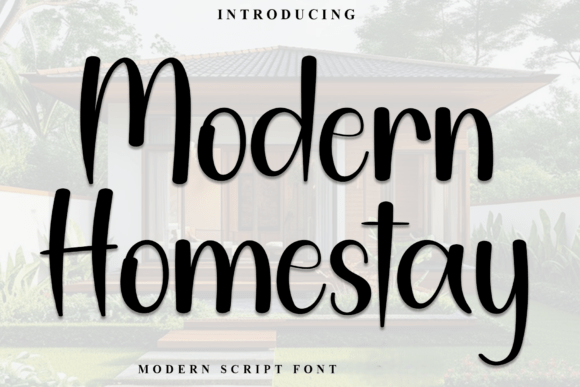
Modern Homestay has a soft, flowing style that feels like it was written by hand, with subtle variations in stroke weight and natural flourishes. It doesn’t feel overly ornate or fussy, which makes it perfect for brands looking to communicate authenticity without sacrificing elegance. The font has a friendly, almost personal vibe that works well across a range of design applications, from logos to packaging and beyond.
Testing Modern Homestay in Real Design Projects
When I first tested Modern Homestay on a logo draft, I was immediately drawn to its balance between casual and refined. It didn’t feel too informal, but it wasn’t stiff either. I paired it with a clean sans serif for the tagline, and the contrast helped create a visual hierarchy that felt both modern and grounded.
On a shop sign, the font added a sense of character without overwhelming the space. It looked great in a larger size, where the details of the script could shine through. For business cards, I used it for the name and title, while keeping the rest of the text in a more structured typeface. This allowed the font to stand out as a key element of the design without sacrificing readability.
When I placed it on product labels, it gave a handmade quality that aligned perfectly with the brand’s ethos. The font also worked well in social media graphics, where it added a touch of personality to captions and headlines. On a homepage hero section, it caught the eye without being distracting, making it an ideal choice for display purposes.
How Modern Homestay Fits Into Branding
Modern Homestay is best suited as a display or headline font. Its expressive nature makes it less ideal for long blocks of text, but it shines when used strategically. As a logo font, it adds a unique flair that can help a brand stand out in a crowded market. It’s also a great accent font when paired with more traditional typefaces.
In terms of brand perception, the font conveys a sense of warmth and approachability. It can be a powerful tool for businesses that want to communicate a personal touch, whether it’s a small café, a lifestyle blog, or a handmade product line. Its visual appeal helps create a memorable identity that resonates with audiences.
For consistency, I recommend using Modern Homestay in key areas like the logo, website headers, and marketing materials. This ensures that the font becomes a recognizable part of the brand’s visual language. It also helps maintain a cohesive look across different platforms and mediums.
Practical Tips for Using Modern Homestay
Before committing to a full brand system, I always test a font in multiple contexts. With Modern Homestay, I experimented with different weights and styles to see how it performed in various sizes and layouts. I also checked the included alternates and ligatures to ensure that the font had enough variation to avoid repetition in design work.
Font pairing is another important consideration. I found that Modern Homestay pairs well with a simple serif or sans serif typeface. This creates a balanced composition that allows the script font to take center stage without clashing with other elements. It also helps maintain clarity in the overall design.
When working with clients, I always make sure to explain the strengths and limitations of a font. Modern Homestay is a premium font that offers a lot of character, but it’s important to use it thoughtfully. I advise clients to keep it limited to key design elements rather than overusing it throughout their entire brand system.
Real-World Applications of Modern Homestay
One of the most rewarding aspects of using Modern Homestay is seeing how it transforms different design elements. On a flyer for a local event, it added a personal touch that made the message feel more authentic. In editorial design, it worked well as a headline font, drawing attention without overpowering the content.
For digital templates, the font added a human element that made the designs feel more engaging. It was especially effective in email newsletters and social media posts, where it helped create a sense of connection with the audience. In merchandise design, such as t-shirts or mugs, it gave a custom feel that customers appreciated.
Overall, Modern Homestay is a versatile and expressive font that can enhance a wide range of design projects. Whether you’re working on branding, packaging, or digital assets, it offers a unique way to communicate warmth and personality through typography.
As a designer, I’ve found that fonts like Modern Homestay are more than just visual elements—they’re tools for storytelling. They help shape the identity of a brand and influence how audiences perceive it. With its natural charm and practical appeal, Modern Homestay is a valuable addition to any designer’s toolkit.